
To keep up to date with events and news, and to receive helpful insights about pregnancy, birth and beyond,
To keep up to date with events and news, and to receive helpful insights about pregnancy, birth and beyond,

This is a massive fear for so many women I work with.
It always comes up during birth prep and yes I HEAR YOU, it sounds pretty awful to tear during childbirth.
I usually encourage a twofold approach to tearing, firstly to to reduce the risk and severity of tearing, but also a mindset shift to acknowledge tearing as a normal and necessary part of birth for some. unfortunately we can't know who will tear, so it's worth getting your head around the possibility.
We are designed to unfold, to stretch, sometimes to tear, and then to HEAL. Your perineum is able to slowly stretch and expand as your baby comes down, and even though it feels intense, and you might want to get it over and done with ASAP, the slower the better!
The most awful but fitting analogy I have is that your perineum is like the crumple zone of a car. Tearing is sometimes an inevitable part of birth, the perineum is there to take impact and protect more essential areas of your body (yes, babe, I mean your bum hole).
BUT (pun intended 🍑 😏) There is so much we can do to reduce the risk and severity of tearing.
Here's some of my top tips:
What if I do tear?
Tearing is not a failure. It's your body doing its best in a powerful, intense, full capacity moment, bringing a whole new life into the world. Most tears are small, and heal well when supported by good care, good blood flow, nutrition and rest.
Stitches aren't always needed, and part of my role is to help you gather all the information you need to decide what the right course of action is for you, whether it's leaving things to heal naturally, having stitches where you are, transferring into hospital, or in more serious cases into theatre.
I've seen a few stitch-uations in my time (and had one myself) and I assure you, things will heal. It's a great excuse for bed rest with your precious new babe and to be cared for by others while you recover.
Fear tightens. Trust softens.
Your body is not fragile.
It is clever and responsive.
You have capacity to stretch and heal.
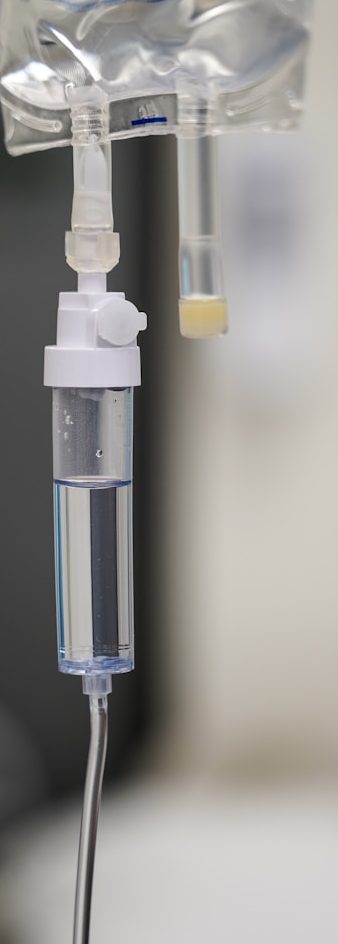
If you're pregnant you can be pretty sure you'll be offered an induction at some point. It's not my job to influence your decisions about birth, but I want you to feel confident about those decisions, and prepared for what comes next!
An induction can be beneficial in certain circumstances when it would be safer to have your baby sooner rather than later due to risks to your of your baby, as long as you are feeling well enough to have a vaginal birth.
Often induction is suggested due to potential risks based on populations of people or guidelines, rather than looking at someone's individual risks. In many cases it's just as safe (sometimes safer) to wait for labour to start in its own time. It can feel like there's a lot of pressure to accept an induction which can be stressful, but this decision has to be yours, and you should be supported whatever you choose.
If you are considering an induction then listen up!
This can be the start of a great birth experience, but you've got to go in with your eyes WIDE open and your wits about you!
Top tips for a positive induction
Before you start:
During the labour:

Did you know your body comes fully equipped with its own powerful pain relief for labour?
Endorphines!
As labour progresses, your body produces endorphins, incredible feel-good hormones that can be up to 200 times stronger than morphine. They help you sink into your birthing zone, soften the edges of intensity, and create a calmer, more euphoric state.
But here’s the thing: endorphins flow best when you feel safe, supported, and undisturbed. If fear or stress take over, adrenaline can push them aside, making contractions feel more painful and labour harder to manage, and making you question whether you really can get through it.
Ways to boost your natural endorphin production in labour:
Dim the lights: darkness and privacy encourage oxytocin and endorphins.
Listen to music you love: rhythm and relaxation increase those feel-good hormones, and movement and swaying can also release tension.
Connection: cuddles, hand-holding, gentle touch, or even kissing can keep the oxytocin–endorphin cycle flowing.
Breathing techniques & hypnobirthing tools: calm your nervous system, reduce fear, and let endorphins rise.
Trust your body: surrendering to the rhythm of contractions rather than fighting them helps your body’s natural chemistry do its work.
Birth isn’t just about “getting through” the pain, it’s about working with your body and tapping into the hormones designed to support you. You are wired for this.
Other natural comfort measures:
Both of these make use of 'Gate Control Theory,' which tells us that the brain can only focus on one intense sensation at once, essentially distracting you from the labour pains.
Whatever tools you take, love and support are the greatest comfort measures during labour. A responsive partner who is able to meet your emotional and physical needs can make all the difference.

Too often, people giving birth are made to feel like passengers in their experience. Let’s be clear, you have full legal rights to make decisions about your care during pregnancy and birth, including saying no to ANY intervention.
Way too often that "no" is followed up by coercion, guilt trips, pressure and disregard for your autonomy and choice, causing stress, doubt, fear and trauma.
A woman in labour shouldn't be having to work hard to advocate for decisions she has made. She should be respected in her decision making, but sadly disrespect, coercion and pressure is the reality for so many.
During over a decade working as a Specialist Speech and Language Therapist, I have supported hundreds of people through complex decisions in the medical setting so I'm sharing my top tips with you here!
What the law says:
So what can you DO?
Birth isn't about doing what you are told, it's about following your instincts and doing what's right for you and your family.
We need your consent to load the translations
We use a third-party service to translate the website content that may collect data about your activity. Please review the details in the privacy policy and accept the service to view the translations.